Tan Howe Liang, Singapore’s first Olympic medallist, dies at 91
By Justin Kor
He won Singapore’s first Olympic medal, turned weightlifting into one of the country’s most successful sports, and inspired a national multimillion-dollar initiative that ended a 48-year Olympic medal drought.
Tan Howe Liang, whose silver medal at Rome 1960 made him Singapore’s first and only Olympic medallist for almost half a century, died on 3 December 2024. He was 91.
He was a sportsman born ahead of his time, chasing sporting glory at a time when a pre-independent, third-world Singapore paid little attention to anything other than economic progress. The lacklustre attitude towards sports did not deter his quest for success – Tan swept everything in his path, winning medals at the South-east Asian Peninsular (SEAP) Games, Asian Games, Commonwealth Games, and Olympics.
From the back alley to the Olympic podium
These were achievements stemmed from a promise made to his dying father. The third of seven children, Tan was born in the southern Chinese city of Swatow in 1933, emigrating to Singapore with his family when he was four and settling in the cramped quarters of Chinatown.
At 14, he was left fatherless and alone after his ailing father died in a deathhouse and his mother returned to China, leaving him in the care of his granduncle and grandaunt.
Just before his father’s passing, Tan vowed that he would be one of the strongest men in the world. It was a promise likely fuelled by a burning desire to break out of hardship.
Weightlifting provided that chance. At the now-defunct Gay World Amusement Park, he came across a strongman competition and was drawn to the seemingly superhuman feats of strength. He began training seriously in 1952 after joining the Evergreen Weightlifting Party for 50 cents a month, with sessions conducted at a dingy back alley near Boat Quay.
Facing a lack of financial support for his athletic endeavours, he self-funded his training and overseas competitions, working a variety of jobs such as a dockworker, a store clerk and an electrician.
For Tan, there was no obstacle too tough, no weight too heavy. Harold de Castro, a fellow teammate, once said of him in a National Oral Archives interview, “Tan is what we call a crazy guy. He will just hypnotise himself and he will just go there and lift… he does not know how many pounds he is lifting. He is crazy, because he has no barriers, no limits. That’s the reason why he can improve.”
Combining a relentless work rate with raw power, he became national champion within a year. Within a decade, he would break the world record in the clean and jerk at the 1958 Commonwealth Games, and strike gold at the Asian and SEAP Games in 1959.
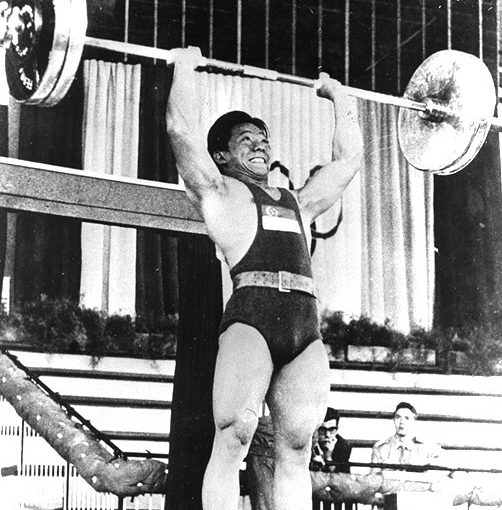
The apex of his career came a year later in the halls of the Palazzeto dello Sport in Rome. Tan went to Italy with two purposes: redemption and recognition, the former brought about from a failed outing at the 1956 Olympics. Touted as a medal contender in Melbourne, Tan had finished a disappointing ninth. It would not be repeated. Fighting excruciating cramps and blacking out at one point, he single-handedly placed Singapore on the world map.
“Howe Liang’s achievement has inspired many generations of Singaporeans,” said Singapore National Olympic Council president Ms Grace Fu. “Athletes of his generation had much lesser, but they accepted what they had and trained hard. His achievement in Rome goes to show what one can achieve, if one simply devotes himself to it. He also exemplify the value of a true Olympian athlete through his humility and kindness.”
A forgotten hero
Despite his gladiatorial achievement in Rome, there was no exuberant homecoming party or rousing parade awaiting Tan back home. A modest tea party at the Istana and a dinner hosted by his bosses at the Cathay organisation were the only recognitions given – a far cry from the grand reception that Singapore’s Olympic medallists receive today.
Though the welcome may have been muted, his Roman conquest reverberated through the local sporting community. What was once thought impossible had been attained. “It was already a dream come true to qualify for the Olympics – the pinnacle of sports achievement. What more to win a medal?” said the late Dr Tan Eng Liang, a 1956 Olympian and former national water polo player.
“There was no incentive, except the personal commitment and pride to represent the country. Howe Liang and his generation, in terms of achievement, in terms of bringing glory to sports under very difficult economic situations, is to be admired more than a medal.”
But the admiration would have to wait. Tan’s feat also coincided with a tumultuous period for Singapore – one marked by racial riots, the foreign threat of Konfrontasi, and an unwilling separation from Malaysia. What significance was an Olympic silver medal, compared to a newly-independent nation’s fight for survival? The achievement became buried beneath Singapore’s rapid economic and societal progress.
After winning one last gold at the 1962 Perth Commonwealth Games and unable to repeat his performance at the 1964 Tokyo Olympics, he called time on a glittering career. The veteran harnessed his vast experience to nurture the next generation of weightlifters. Under his tutelage, the likes of Chua Koon Siong and Tung Chye Hong became SEAP Games medallists. As Chua simply put it: “If you wanted to succeed as a weightlifter back in the day, you had to go find him.”
Off the training mat, he also delved into another love of his: cooking. “No one knows that cooking is my first love. I took up weightlifting when I was 21 years old, but from young when I was in Chinatown, my main interest was cooking,” he once said. In 1977, he opened a restaurant that specialised in Peking cuisine, but the business shuttered. He later became a gym supervisor.
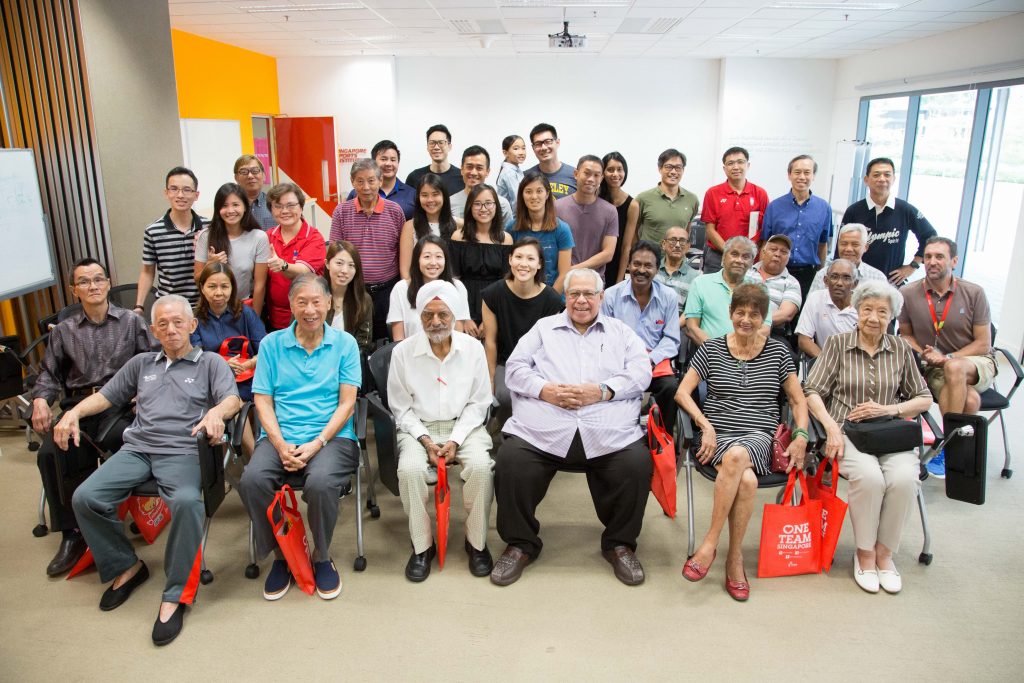
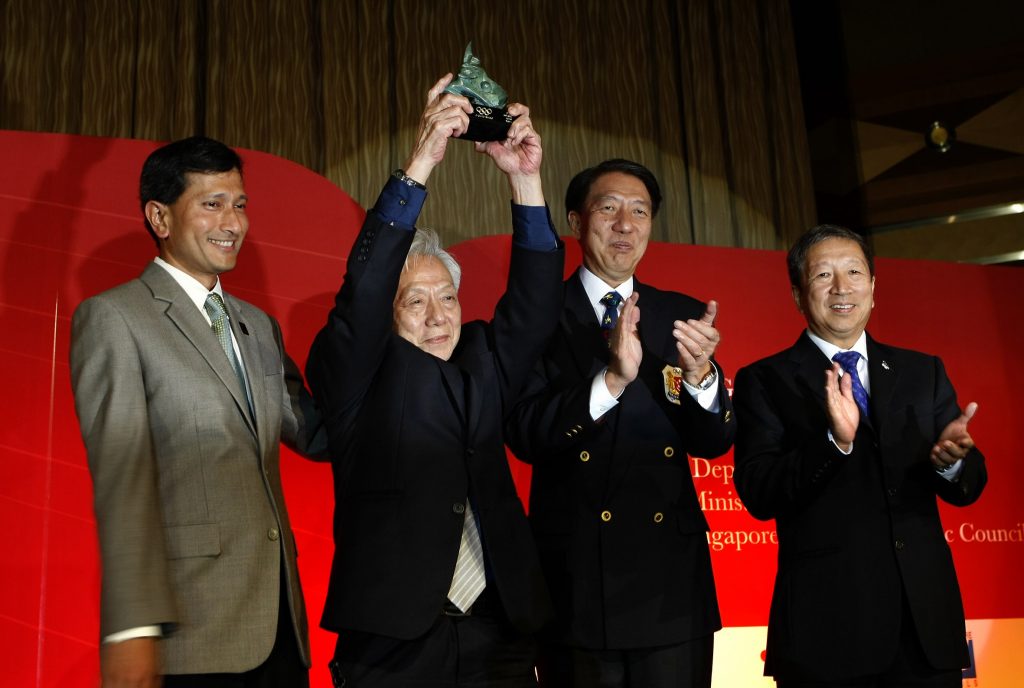
Weightlifting would also slip into obscurity in Singapore by the 1990s, and Tan did too, reduced to making the occasional appearance at sporting events. But his Olympic accolade was not all for nought – it would later serve to be the inspiration behind Project 0812, the sports project that looked to put Singapore athletes on the Olympic podium again. It duly did, leading to a silver in Beijing 2008 and two bronzes in London 2012. In 2016, the International Olympic Committee (IOC) awarded him with the IOC Diploma of Merit, for his contributions to the Olympic movement.
“Howe Liang is a constant reminder of what it really means to fight through adversity, and being able to come out strong and persevere through it all,” said IOC member Mr Ng Ser Miang. “When you get to know the man himself, you get to admire him for his character. He’s very upright.”
An imposing physical specimen in his prime, his legacy has been immortalised by that iconic photograph taken in 1960 – teeth clenched, arms straining, as he lifted himself and Singapore onto the world stage. “Mr Tan leaves behind a strong legacy, because most weightlifters know who he is. He is still an icon, and a lot of lifters look up to him,” said Mr Tom Liaw, president of the Singapore Weightlifting Federation.
Perhaps one moment best summed up Tan’s pure passion. In 1984, he was honoured with a gold plaque from the International Weightlifting Federation for his services to the sport, 24 years after his historic achievement. A reporter asked if he had become tired of weightlifting.
“Weightlifting is in my blood. How can I give it up?” came his reply.
“How much longer then?”
“Until the last day.”
He did.